


New rules and new research on plastic in food: three updates from 2026
In brief: the EU has tightened rules on PFAS in paper and cardboard food packaging. A small study found roughly 60% lower BPA levels in urine with reduced plastic contact. And the EU has updated its rules on intentionally added...
Prefer to listen? Hear the article as a podcast (approx. 5 min).
2026 has brought several developments around the materials that come into contact with our food. New EU rules on PFAS in food packaging have come into force, an Australian study has measured what happens when food has fewer plastic contact points, and the EU has updated its rules on intentionally added microplastics. Here are the three stories in brief, with links to the sources so you can read further.
1. New EU rules on PFAS in food packaging

PFAS are a large group of fluorinated compounds that have been used, among other things, to make paper and cardboard grease- and water-resistant — for example in pizza boxes and chip bags. These substances are difficult to break down in the environment, and some can accumulate in humans and animals, according to the Danish Veterinary and Food Administration.
Since 12 August 2026, the EU Packaging and Packaging Waste Regulation (PPWR) has set limit values for PFAS in food packaging. Packaging placed on the market after that date must comply with the limits, explains the Danish Environmental Protection Agency. Packaging already on the market before that date may remain in circulation, so older products may still appear for some time.
On 10 October 2026, a further rule came into effect. Paper and cardboard that comes into contact with food may no longer contain PFAS from the so-called PFHxA family. This applies not just to packaging, but also to items such as baking paper, muffin cases, paper plates and paper cups — and it covers products already on the shelves. This is reported by the German consumer organisation Verbraucherzentrale.
What about Denmark?
Denmark moved early. Since 1 July 2020, it has been prohibited to market paper and cardboard food contact materials treated with PFAS. The Danish ban still applies. According to the Danish Veterinary and Food Administration, the EU's new rules do not entirely overlap with the Danish ban. However, the agency considers the Danish ban to be complied with if a business can demonstrate compliance with the EU packaging rules.
What does this mean in practice?
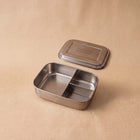
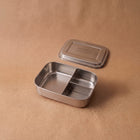
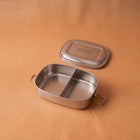
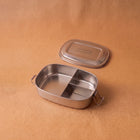
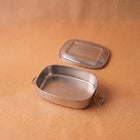
In short, pizza boxes and chip bags may no longer be treated with PFAS to keep out grease. This requirement applies to everyone. If you want to avoid single-use packaging altogether, Verbraucherzentrale recommends bringing a reusable box — such as one made from stainless steel — and having your takeaway placed directly into it. Ask whether they'll fill your own container.
A stainless steel lunch box can be washed and used again and again. If you need to keep food hot on the way home, a thermo lunch box is what you need — only thermo products provide insulation.
2. New study: fewer plastic contact points led to lower BPA levels in seven days

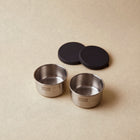
In April 2026, the PERTH study was published in Nature Medicine. Australian researchers randomly divided 60 adults into five groups. For seven days, participants received either food produced, packaged and delivered with as little plastic contact as possible, kitchenware without plastic, personal care products with minimal plastic, a combination of these, or no changes at all. The kitchenware used was metal, glass or untreated wood.
The group that received both food and kitchenware with minimal plastic contact had, after one week, approximately 60% lower BPA levels in their urine compared to the control group. Levels of two phthalates also fell. However, a different phthalate, DEHP, did not decrease.
The study should be read with caution. It is small, with 12 participants per group, and the researchers themselves describe it as a pilot study. It measures how much of these substances is excreted in urine — in other words, how much people are exposed to. It does not tell us whether this has any effect on health, and the researchers themselves call for larger studies. It is also not a study of lunch boxes specifically, but of the entire journey from field to table.
For context, BPA has been banned in food contact materials in the EU since January 2025, subject to certain transitional provisions (Regulation (EU) 2024/3190).
The everyday takeaway
The study suggests that what food has been in contact with along the way may affect how much of certain plastic-related substances we take in. You don't need to change everything at once. A good starting point is the advice given by the Danish Veterinary and Food Administration: discard plastic containers that are worn, scratched or cracked, and avoid storing or heating hot food in tubs originally meant for ice cream or similar dairy products.
Stainless steel is not entirely without migration either. It can release small amounts of nickel and chromium, particularly with prolonged contact with acidic food. Limits have therefore been set for how much metal may migrate from kitchenware (EDQM).
3. EU updates rules on intentionally added microplastics

In 2023, the EU adopted a restriction under the REACH chemical regulations on the sale of intentionally added microplastics — small synthetic plastic particles deliberately added to products. With Regulation (EU) 2026/1168, the EU has now clarified and adjusted parts of those rules.
According to the Norwegian Environment Agency, the amendment introduces neither new bans nor stricter requirements. It clarifies the exemption for medicinal products, introduces an exemption for certain types of research, and from 22 June 2028 adjusts the exemption for microplastics that are permanently incorporated into solid materials. Norway adopted the changes on 1 October 2026.
This is therefore a technical update rather than a new ban. It does, however, show that microplastic regulations continue to be refined. How much microplastic we ingest through food, drink and air — and what this means for us — is something researchers are still working to establish. The European Food Safety Authority EFSA has not yet completed a full risk assessment and expects to publish a scientific opinion by the end of 2027.
Key takeaways

- The rules on PFAS in food packaging apply to everyone, so pizza boxes and chip bags are covered regardless of where you shop.
- If you want to use less single-use packaging, a reusable box can handle both takeaway and packed lunches.
- A new study suggests that fewer plastic contact points in the food chain may reduce exposure to certain substances. No effect on health has been demonstrated.
- Hot food and worn plastic are a poor combination. Choose a container designed for the purpose.
Want to know more about where plastic and chemicals hide in everyday life? Also read 6 surprisingly common things that release microplastics and chemicals.
Frequently asked questions
Is there still PFAS in pizza boxes in Denmark?
In Denmark, the use of PFAS in paper and cardboard food contact materials has been banned since 2020. From 12 August 2026, the EU's limit values also apply to all food packaging, and from 10 October 2026 the PFHxA family of PFAS is prohibited in paper and cardboard that comes into contact with food.
Does a stainless steel lunch box release no substances at all?
Stainless steel can release small amounts of metals such as nickel and chromium, particularly with prolonged contact with acidic food. Limits have been set for how much metal may migrate from food contact materials.
Does the PERTH study show that less plastic makes you healthier?
No. The study shows that levels of certain plastic-related substances in urine fell over one week. It did not examine whether this affects health, and it is a small pilot study.
